Description of the Test Kit
Did you know that more than 50% of homes have a moisture problem? And that this moisture can lead to mold growth in homes?
Mold is a microscopic fungus that thrives in warm, humid conditions. To reproduce, it releases spores into the indoor air.
The presence of mold in the indoor environment of homes can lead to serious health problems: irritation of the nose and throat, flu-like symptoms (stuffy nose, runny nose...), the onset and worsening of asthma, allergies (respiratory and skin), respiratory disorders…
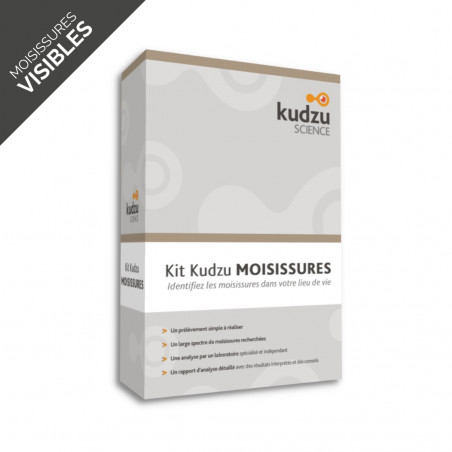
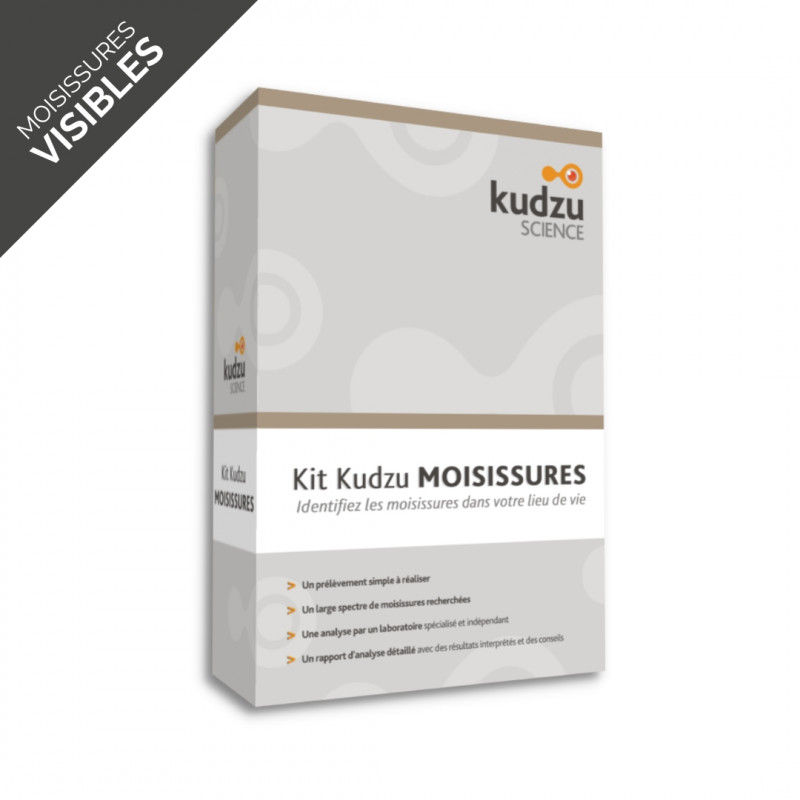
With the Visible Mold Test Kit, you’ll be able to determine whether the microorganisms you observe are hazardous to your health and take steps to improve the quality of your indoor environment.
Is this kit suitable for my situation?
These two kits are intended solely for identifying mold observed on surfaces (growth on walls, caulking, etc.).
If you suspect the presence of mold (damp room, respiratory symptoms, etc.) but do not see any visible mold, you can use the
Invisible Mold in Dust Kit: In fact, as mold reproduces, it releases spores that can be found in dust and identified after culturing, even if they are initially invisible.
Contents of an Analysis Kit
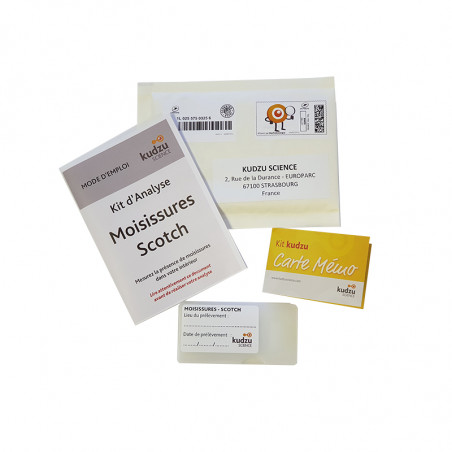
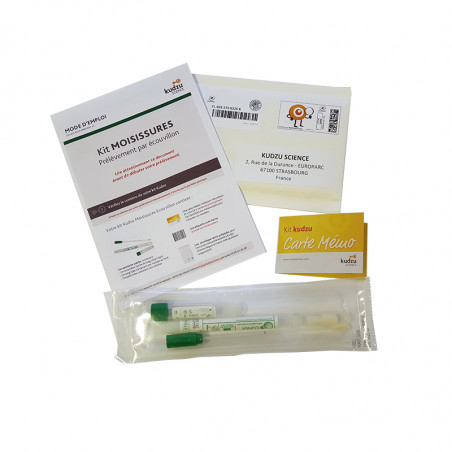
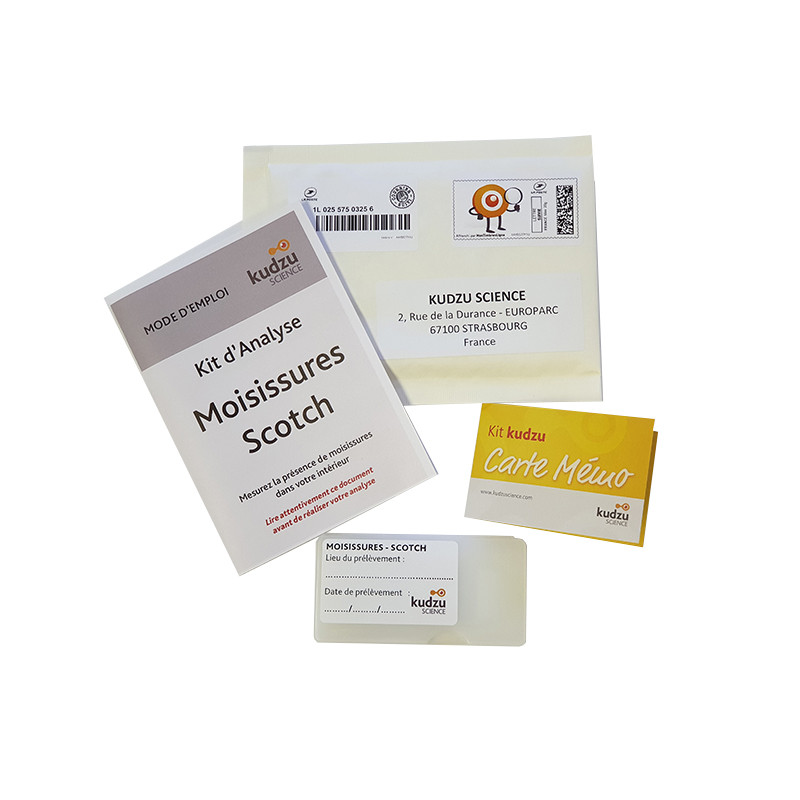
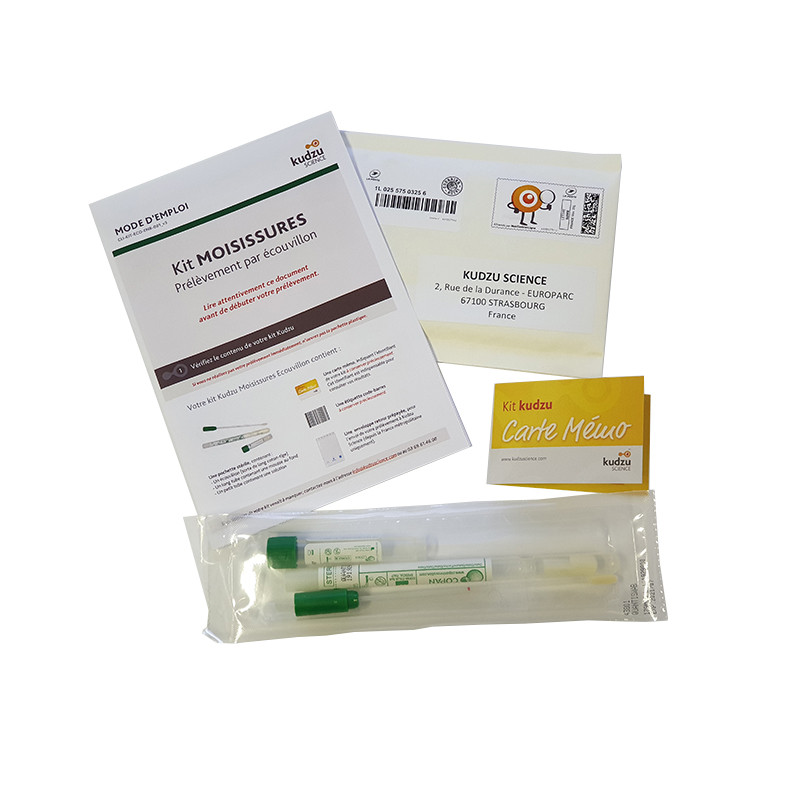
Everything is included in your test kit:
- 1 detailed instruction manual
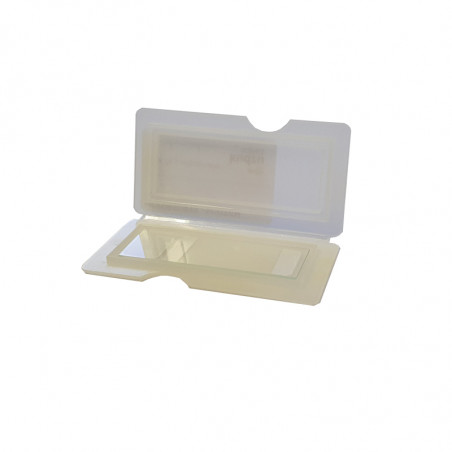
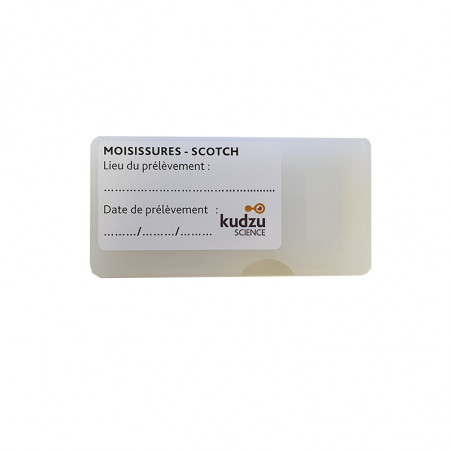
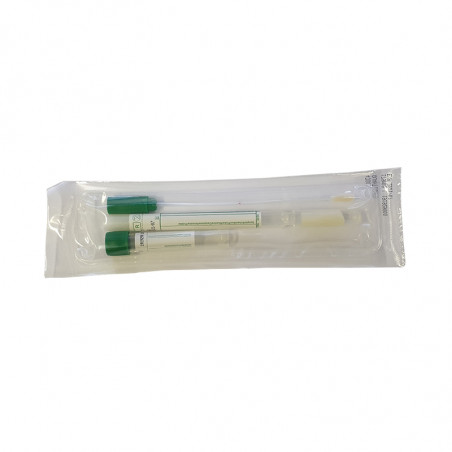
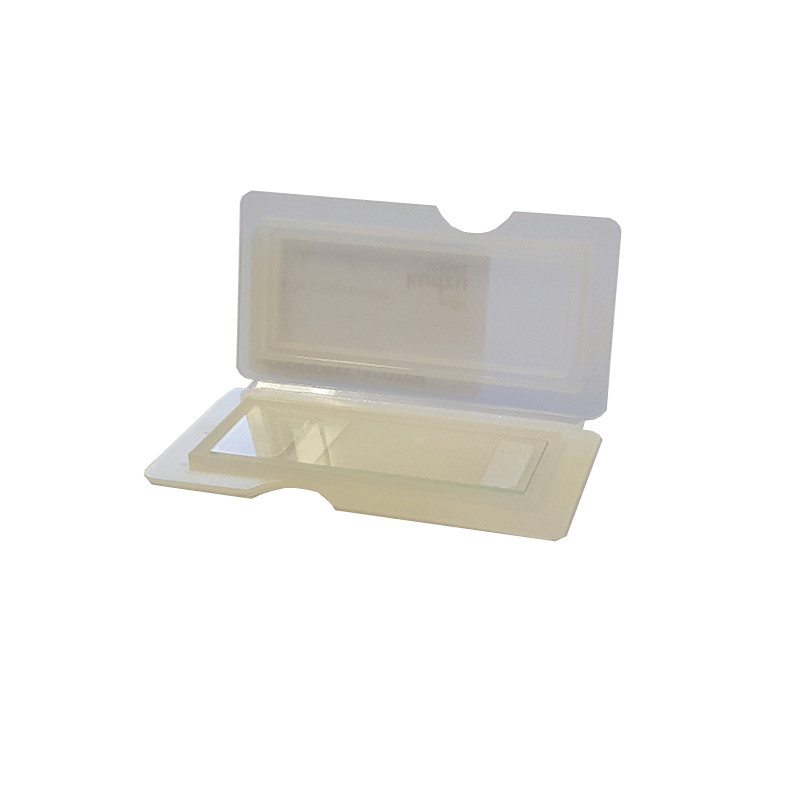
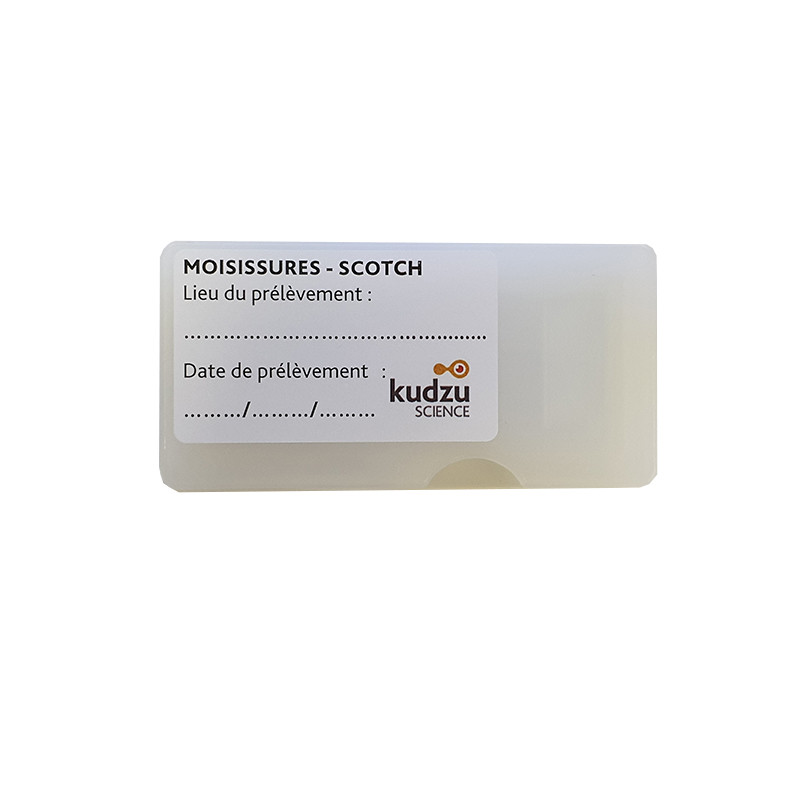
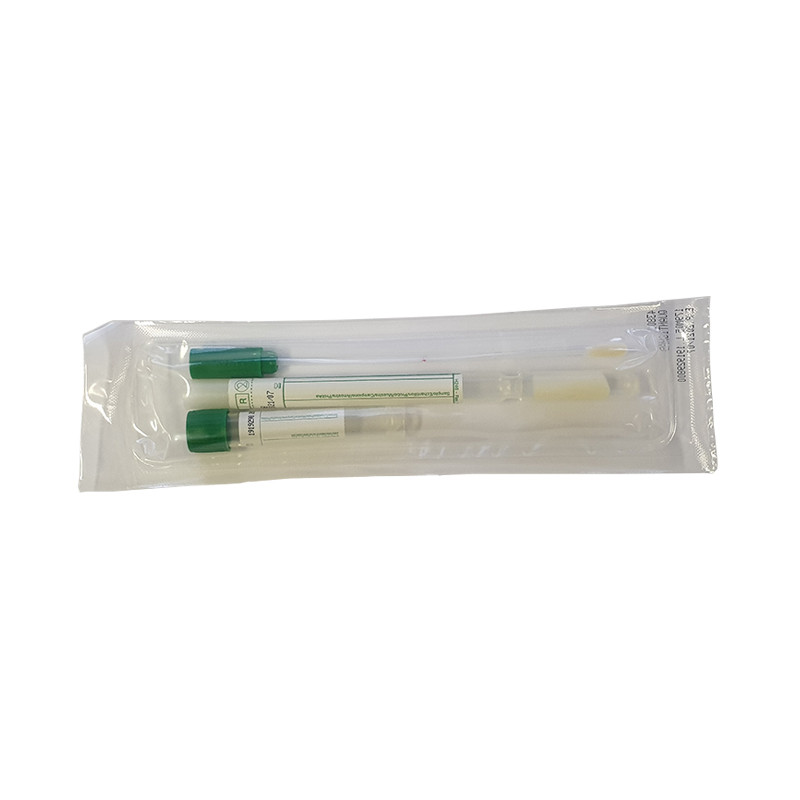
- 1 surface sampling device (adhesive-backed slide or swab)
- 1 prepaid return envelope (Metropolitan France only)
- 1 test*
- 1 interpreted test report
* Scotch: microscopic examination of the slide
Swab: culturing of sampled molds, identification of present molds via microscopy, and quantification of identified mold strains.
Using the analysis kit
Adhesive tape: Applying the tape to the contaminated surface
Swab: Wipe the contaminated surface with the swab
Results and turnaround time
The report is available no later than 20 days after the sample is received by the laboratory.
Adhesive Tape: Only the identification of present molds is performed; no quantitative information is provided.
Swab: In addition to the previous service, this analysis provides quantitative data on the identified molds. Furthermore, culturing the sampled surface allows for the detection of strains present in very small quantities that would not be detected using the “Scotch” kit.