
TheCO2 level in indoor air is a relevant indicator for assessing a room’s airtightness. In indoor building environments, this molecule is primarily produced by human respiration (exhaled air). ACO2 level exceeding 1,500 ppm indicates that air exchange is insufficient. If this threshold is exceeded, measures must be taken to improve indoor air quality.
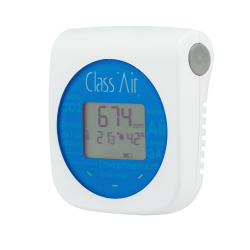
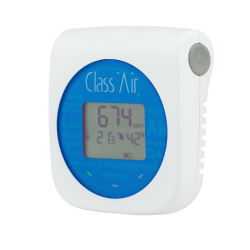
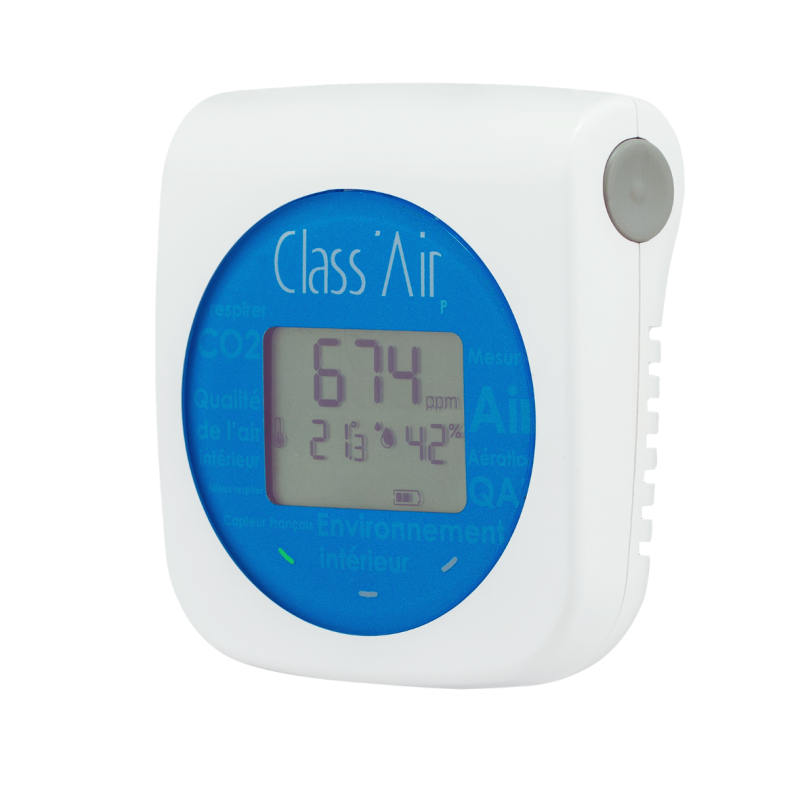
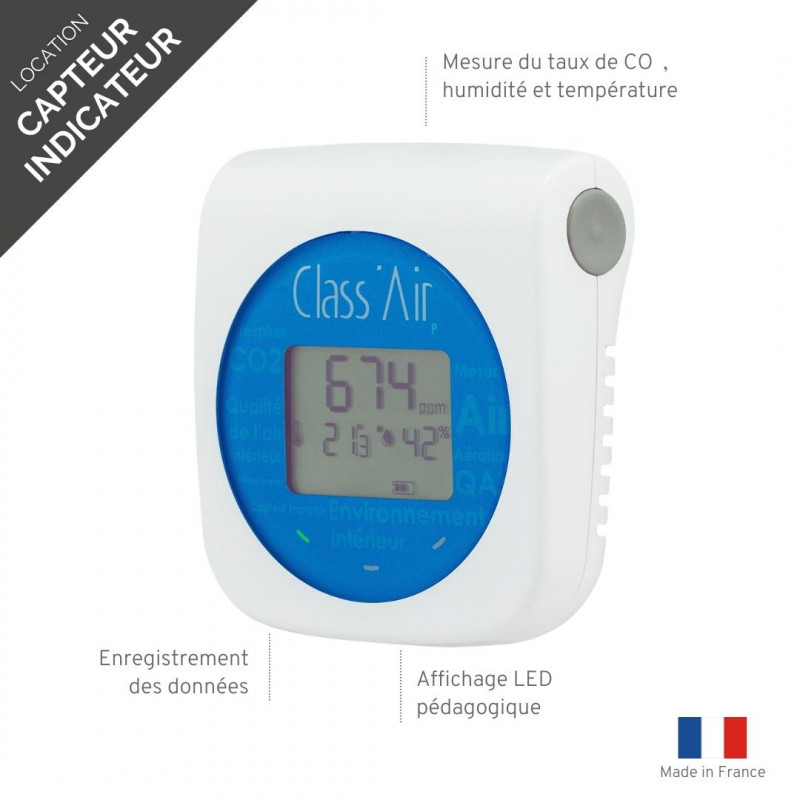
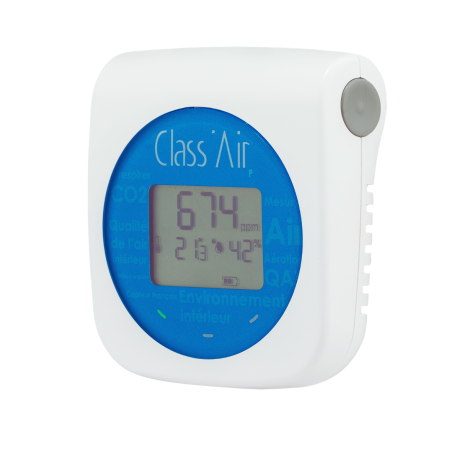
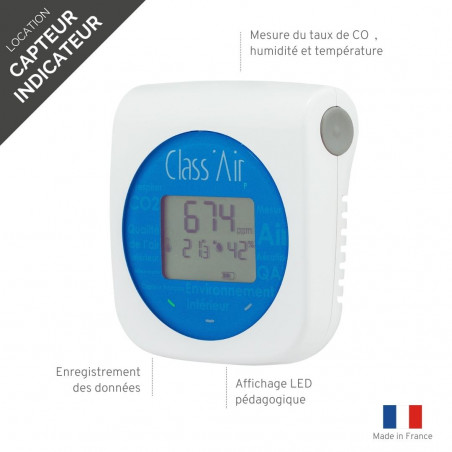
TheCO2 sensor selected by the laboratory is a Class’Air electronic unit, approved by the CSTB for measuring carbon dioxide in the indoor air of public-access facilities (ERP). It is equipped with a high-precisionCO₂sensor (NDIR technology) that offers a resolution of 1 ppm.
Its display shows real-time readings ofCO₂ levels, temperature, and humidity (one measurement every 10 minutes). It also features three colored LEDs (green, orange, red) that make it very easy to visualize theCO₂ level.
ContinuousCO2 monitoring over a period of just a few days is ideal for identifying pollution peaks and/or evaluating the effectiveness of available air circulation and ventilation systems. That is why the electronicCO2 logger is available for rent on a weekly basis.
Recommendations from the Ministry of Solidarity and Health
2023 Recommendations from the Indoor Air Quality Observatory
Practical Guide for Institutions
The Class’Air sensor is the ideal solution.Simple and intuitive, it allows you to continuously measureCO2levels, enabling you to identify pollution spikes and/orevaluate the effectiveness ofavailableventilation systems.
Recommended for self-assessment measures under the decree regarding indoor air quality (IAQ) in public-access facilities, it can also be used as a lockdown indicator during the COVID-19 crisis.
We offer this high-end sensor for rent, but you can also purchase iton this page.
If you operate a public access facility and wish to conduct measurements under the decree regarding indoor air quality monitoring, check out our dedicated analysis kit (IAQ Self-Diagnostic Kit for Public Access Facilities).
This sensor will allow you to monitor the following over several days:
Real-time monitoring of these parameters will allow you to assess the level of airtightness in your rooms and thereby improve your indoor air quality.
The sensor is very easy to use. A user manual is provided, explaining how to start the recording and how to stop it 4.5 days later (ideally, the sensor should be placed in schools from Monday morning through Friday afternoon).
Monitoring the level of carbon dioxide (CO2) in indoor air is a very good indicator for assessing the airtightness of an enclosed space.
Continuous measurement over a one-week period makes it possible to determine whether air exchange is sufficient.