
Pesticides areubiquitous in our environment and are now a major public health concern.
These molecules, which belong to the SVOC (Semi-Volatile Organic Compounds) family, are not very volatile at room temperature. When exposed to a heat source, they turn into gas and contaminate the ambient air. Pesticides also settle on dust particles, the finest of which are suspended in the air we breathe. In the home, the primary route of exposure to pesticides is therefore the ambient air and the dust particles it carries.
There are many sources of pesticides found in homes, with agriculture being the source most widely recognized by the general public. In fact, if you live near agricultural areas (fields, vineyards, orchards, etc.), your home may be exposed to pesticides, which can be carried by the wind over several kilometers around the application area.
However, non-agricultural sources of pesticide emissions are widely underestimated. Wooden structures (roof trusses, antique wooden furniture, etc.) are treated to prevent damage from mold or insects. Insecticides such as mosquito repellents, veterinary products (antiparasitics), treatments against mites, and even plant protection products like herbicides or insecticides sold in supermarkets and garden centers only add to the list of pollutants surrounding us.
Added to these lists are POPs (Persistent Organic Pollutants)—substances toxic to humans and the environment—whoseuse has been banned for many years but which persist in the environment, can travel long distances, and accumulate in living organisms. (To learn more,see this explanatory document from the ministry and the list of POPs listed in the Stockholm Convention.)
Sincepesticides found indoors are not subject to the same weather conditions and biological degradation as those outdoors, they tend to accumulate indoors. Most of them are toxic, and chronic exposure—even at low concentrations—poses health risks (effects on development and reproduction, neurotoxicity, endocrine disruption, etc.). However, there are no regulations or guideline values regarding pesticide residues to which we may be exposed in our living spaces (homes, schools, workplaces, etc.).
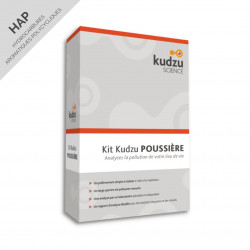
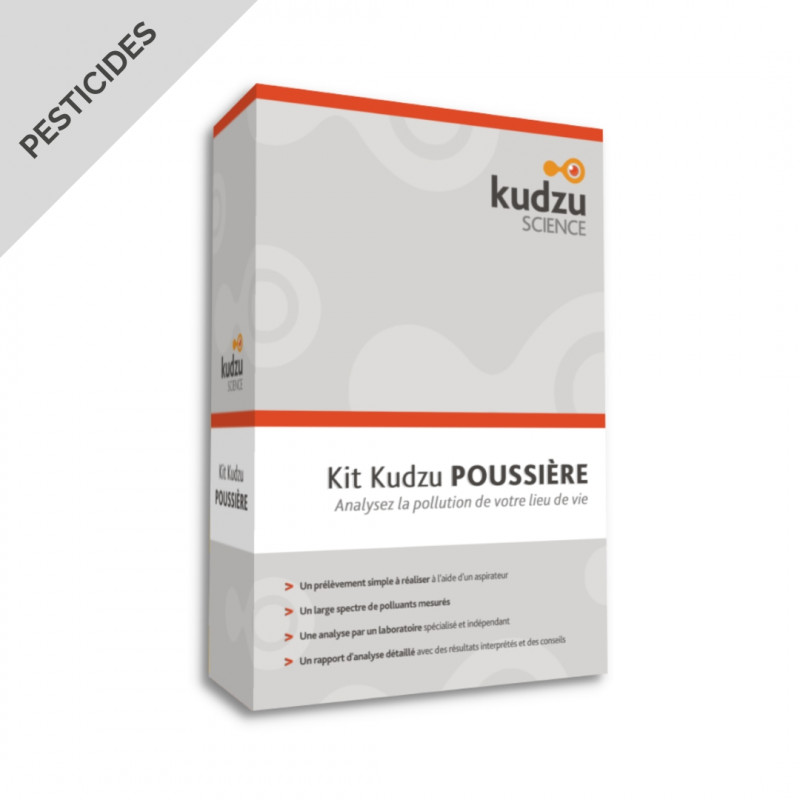
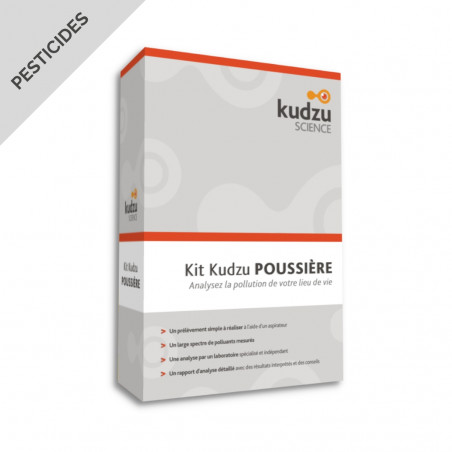
This testing kit allows you to measure the level of contamination in your indoor environment from pesticides of domestic and/or agricultural origin. The dust collection device is very easy to use: simply attach a collection filter to the hose of a household vacuum cleaner and then vacuum the room to be tested. The collected dust is analyzed in a laboratory to identify and quantify the pesticides present. In the absence of guideline values, the results are compared to statistical data compiled by the laboratory (based on data collected since 2014). You can also find the results of theEXPPERT6 campaign conducted in collaboration with the Générations Futures association.
This kit allows you to test for up to 100 agricultural and/or household pesticides that may be present in your home.
Pesticides can cause numerous health problems, depending on their chemical and biological properties. They can be carcinogenic, mutagenic, toxic to reproduction, and harmful to children’s development (endocrine disruptors). Chronic exposure can have consequences for your health, which is why it’s important to identify sources of exposure so you can take effective action.
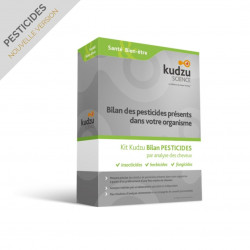
You can also measure your body’s daily exposure to pesticides using our Hair Pesticide Test Kit.
Would you like to measure your exposure to glyphosate? We offer a specialized test for this in our Glyphosate Hair Test Kit.
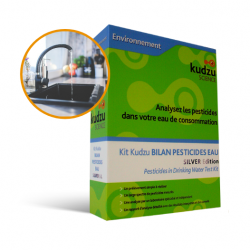
You can also test for pesticides in your water using our Drinking Water Kit(tap water) and our Natural Water Kit(well, pond, river).
The compounds analyzed by Kudzu Science were selected for the relevance of their research, based on the results obtained from dust samples analyzed in the laboratory since 2014, particularly their occurrence (detection frequency). The list also includessubstances identified as priorities by ANSES in 2020, following the results of the National Exploratory Pesticide Campaign (CNEP) in outdoor air.
Pyrethroids, neonicotinoids, organochlorines, organophosphates, carbamates… Discover all the compounds analyzed in each kit variant in the complete list below:
List of molecules by kit variant
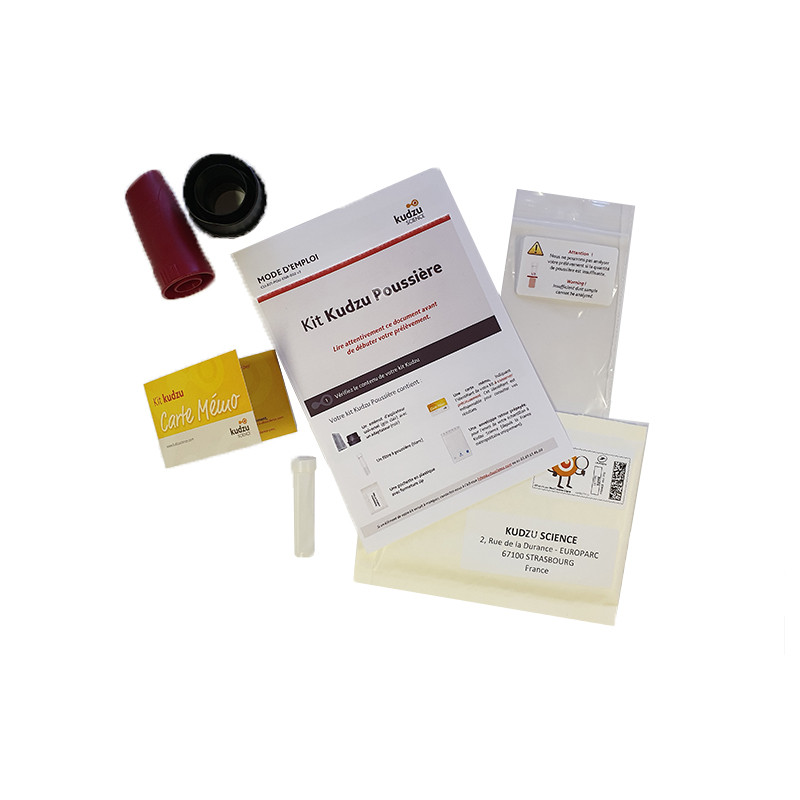
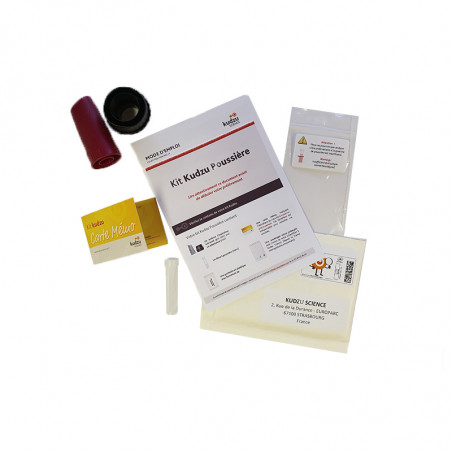
Everything is included in your analysis kit:
Instructions for the Pesticides in Dust Kit
Your report will be available for direct download from the“My Kudzu Kit” sectionof our website within 15 business days after your sample is received at the laboratory. This turnaround time is reduced to 5 days if you select the “express” option.
You’ll receive a comprehensive, personalized, and interpreted analysis report with details of your results, precise and exhaustive information on the pollutants tested for, and advice on how to limit your exposure to pesticides and improve indoor air quality in your living spaces. It is designed to allow you to quickly and easily compare your results with those obtained during measurement campaigns conducted by the laboratory since 2014.
The Pesticide Dust Kit allows you to assess the level of contamination from insecticides, fungicides, and herbicides in your home. This will help you determine whether you are exposed to these compounds, which are harmful to your health, and enable you to take steps to improve the quality of your living environment.