Analytical Instruments
The analytical techniques used in our laboratory are commonly employed in the pharmaceutical industry, clinical research, biological analysis, forensic science, and food and environmental testing.
These techniques, previously reserved for professionals, are now made available to you by Kudzu Science to help you improve your environment and well-being.
At Kudzu Science, analyses are performed using chromatographic separation methods combined with highly sensitive detection methods.
Our equipment is among the most advanced on the market and incorporates the latest technological advancements. It enables the detection and identification of chemical compounds present in trace amounts.
This means we can tell you very precisely which compounds are present in your samples and in what quantities.
Chromatography: Sorting Molecules
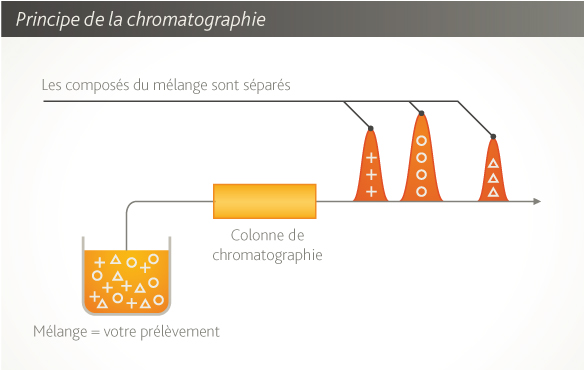
Chromatography is a technique used to separate the various chemical compounds or molecules present in a mixture.
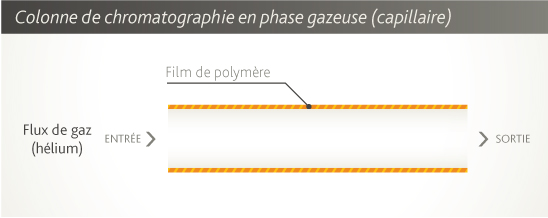
To be able to analyze a very large number of chemical compounds with different properties, we use two types of chromatography:
- Gas Chromatography (GC)
- Liquid Chromatography (LC)
Separations are performed on chromatographic columns.

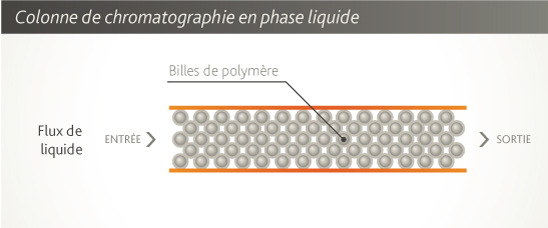
In liquid chromatography, the column consists of a metal tube filled with polymer beads a few micrometers in diameter (stationary phase). To perform the separation, a liquid (mobile phase) is passed through the column; its function is to transport the compounds from one end of the column to the other.
The structure and chemical composition of each compound are unique. Each compound has its own specific affinity for both the stationary phase and the mobile phase.
Consequently, the more a compound is “attracted” by the stationary phase, the more it will be slowed down, and the longer it will take to travel the entire length of the column: the fastest compound arrives first, and the slowest arrives last.
In this way, it is possible to separate the compounds in a mixture based on their affinity.
The analyzed compounds are accurately identified and quantified using mass spectrometry or UV-Vis spectrophotometry.
Mass Spectrometry
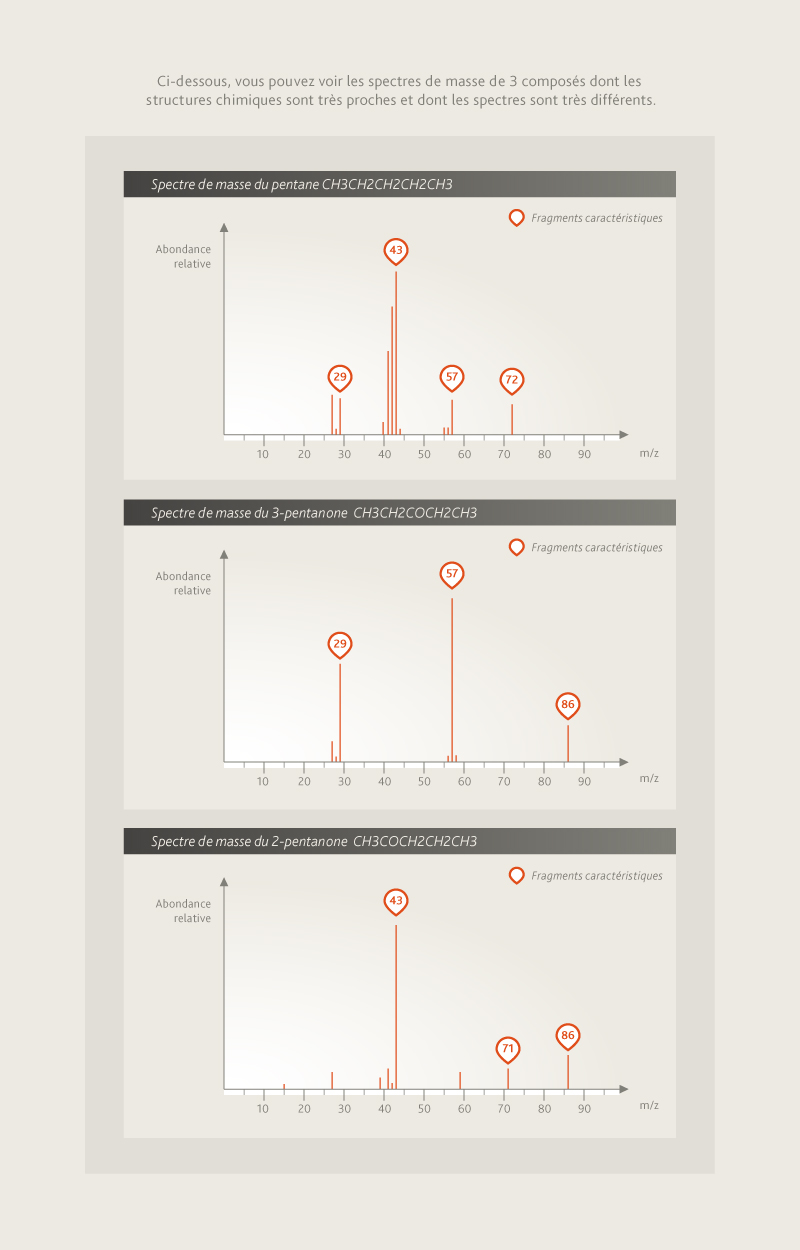
Each compound (chemical molecule) has a unique structure and chemical composition that defines a fingerprint (spectrum) specific to it. A mass spectrometer is a detection device that reads the characteristic fingerprint (spectrum) of each compound.
A mass spectrometer is an instrument in which compounds are converted into ions (chemically charged particles) and then fragmented into small chemical molecules and ions. The resulting ions are guided by an electromagnetic field to a detector and sorted according to their mass. Each compound has a fragmentation pattern (the number of fragments and their respective masses) that is unique to it and allows for its definitive identification.
UV-Visible Spectrophotometry
When light passes through a solution, part of it is absorbed by the solutes (chemical compounds present in the solution). The intensity of the light is lower after it has passed through the solution. The decrease in light intensity is directly proportional to the concentration of the solutes (Beer-Lambert law), which allows us to precisely determine the amount present in your sample.
The term “visible spectrophotometry” or “colorimetry” is used when the light employed is colored and therefore visible to the naked eye (wavelength between 400 and 800 nm), and UV spectrophotometry when the light used is in the ultraviolet range (wavelength less than 400 nm).
Example of a mass spectrum for three different molecules